Bloody Valentines
Three Years for a February 14 Widow
A Valentine’s shag proved fatal for Earl Lester, made his paramour swear off men, and sent his wife to prison.
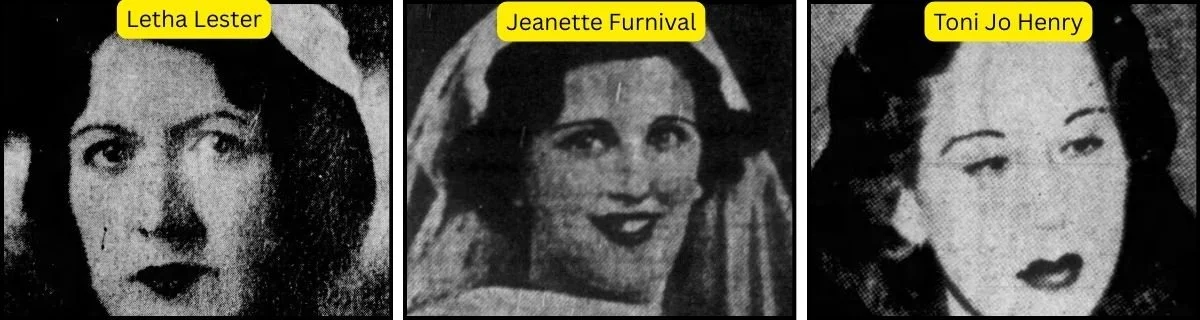
In 1937 Wisconsin, Letha Lester suspected her husband was fooling around. She tracked Earl and his mistress, Kasha Newberger, to the Farm Tavern near Green Bay. Letha didn't go alone; she brought the sheriff and a deputy to barge in on the couple.
Letha offered a deal: she wouldn't file charges if Kasha stayed away from Earl. Kasha was happy to oblige. “I don’t want to have anything to do with men,” she reportedly said. “Men are bad—especially married men.”
The Lesters started for their home in Manitowoc, 40 miles away. Their reconciliation didn't survive the trip—and neither did Earl. Maybe the fact that Letha insisted on sitting in the back seat for the drive was a clue.
Halfway home, the argument reignited. Earl pulled off the road, and Letha pulled a pistol. During the struggle for the gun, Letha shot Earl in the neck. He leapt from the car and ran 50 yards before collapsing in the snow.
Letha was convicted of second-degree murder and sentenced to 14 to 17 years but was paroled after only three. She went on to marry twice more and lived to 71. Kasha Newberger disappeared from the headlines forever.
Deadly Surprise
On Feb. 14, 1938, Richard Furnival of Paterson, New Jersey, stole a revolver from his mother’s house and told a friend he was going to give his wife, Jeanette, “a Valentine she won’t forget.”
When she stepped off the bus that evening, he emerged from behind a tree and shot her in the shoulder, the temple, and — fatally — the heart. He was so close the blasts left powder burns on her.
Neighbors heard the three shots – and a fourth five minutes later. Officers found Richard’s body in a vacant lot a few hundred feet from the scene, the revolver still clutched in his hand.
The Furnivals had married only eight months prior, but Richard refused to find steady work. Tired of supporting both of them with her job at a five and dime, Jeanette had moved back in with her parents.
Her mother, who made a habit of watching for her daughter's bus every evening, witnessed the murder from her window.
Valentine’s Day Hitchhikers
Toni Jo Henry claimed she did it all for love. Her husband of 10 weeks, Claude “Cowboy” Henry, was serving 50 years for murder in Texas. Desperate for cash to spring him, Toni Jo and Army deserter Horace Burks set out to rob a bank.
First they needed a car. On the evening of February 14, 1940, they thumbed a ride with a Houston tire salesman, Joseph Calloway, and forced him into the rumble seat at gunpoint. They slammed the hatch so violently it sliced his hand to the bone.
They drove Calloway to a rice field south of Lake Charles, Louisiana, forced him to strip naked, and ignored his pleas for mercy. Toni Jo killed him with a single shot above the eye.
The two never did rob the bank — the law caught up too quickly. Toni Jo was tried three times and sentenced to death each time. In a final act of desperation, “Cowboy” broke out of prison to save her but was recaptured; he was allowed a final phone call before her execution in November 1942.
Toni Jo sobbed as jailers sheared off her long brunette hair to ensure a clean contact for the electrodes. Yet, when she finally sat in the electric chair, she met the executioner with a smile. Horace Burks followed her to the chair five months later, his final words a grim self-assessment: “I’m no good anyway.”